Kaiulani’s Crystals part 3

Kaiulani was the second Cleghorn daughter to die an untimely death. The first had been Annie Cleghorn Wodehouse, who died in 1897 at age 28 from complications following childbirth . The widower was Hay Wodehouse Jr., the son of the British Commissioner to the Hawaiian Islands. After Annie died, Wodehouse sold the family residence in Honolulu, placed his young children with family members, and moved to North Kohala, Hawaii, where he was employed by the Hamakua Ditch Co. His sister-in- law, Rose Cleghorn Robertson, took two-month old Irma Wodehouse. Two year old Hay was sent to Ainahau to live with his Aunt Kaiulani, his cousin Elsie Robertson Jaeger, his nanny, Mary O’Donnell, and his grandfather, Archibald Cleghorn. Four year old Aina went to Louis and Amy (Wodehouse) Von Tempsky at their ranch on Maui.

The senior Wodehouses had not been available for grandchild placement. He had been declared persona non grata by the Dole government in 1895 and was recalled by London after he was too vocal in his continuing support for Queen Liliuokalani. His request for a farewell audience with the Queen, who at that moment was incarcerated, had been denied by Dole. In the summer of 1897, while making her way to the Davies residence in England en route home, Kaiulani and her father stopped for what would be a final visit with the Wodehouses.

Hay Wodehouse Jr. was also a guest at the Parker wedding at Mana. One wonders if he and Kaiulani had an opportunity to meet. Annie had married Wodehouse in Honolulu almost two years after she and Kaiulani had traveled together to England.

1898 had begun as the best year of Archibald Cleghorn’s life, with his daughter, now a woman of the world, returned from Europe. In February, there had been a birthday luau for Prince David (Koa) Kawananakoa. Some thought an engagement would be announced. There were toasts to the prince and princess, but nothing more, except a curious New York Times entry from February 12, which announced the engagement! In March, there was a farewell party at Ainahau for Theo H. Davies, the former guardian of the Princess, who was returning to England.

Then came June, and word that Davies had died in England. July brought the crushing news that annexation had been approved in Washington. The year which had begun so well was turning to ashes. August found the Americans taking the Hawaiian flag from Iolani Palace and replacing it with three American flags. The Kingdom was gone. America had taken over the Islands. Then too quickly came December, and with it, the Parker wedding.
Kaiulani’s Crystals part 2

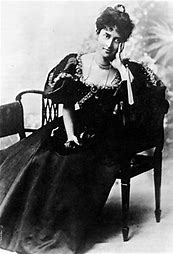
Two years later, the fourteen-year-old Kaiulani was sent to school in England. While life abroad was quite civilized, even luxurious, her health was marginal at best . Summers spent touring Scotland, the French Riviera and the Channel Islands with her father; winters in England and Germany, until 1893, when word came that her aunt, Queen Liliuokalani had been deposed, and the Kingdom abrogated by American businessmen who had established a provisional government. Life became an endless chorus of bad news. Her father blamed her aunt for the government takeover. Then he blamed her again for not agreeing to amnesty for the plotters in exchange for the return of the Kingdom, resulting in a falling out between Cleghorn and his sister-in-law, the Queen. The American government could not decide what to do about the Hawaiian problem. While the stalemate continued, rumors of revolution were heard, then confirmed. The revolt was quelled and the queen was jailed. Kaiulani’s father attempted to negotiate with the Dole group regarding a role for Kaiulani in the new Hawaiian government, but he was unsuccessful. There was no place for a post-script princess. The Kalakauas had poisoned the well. The Kingdom would not survive. In 1897, at age twenty-two, Kaiulani at last returned to the islands. The Kingdom had been lost, replaced four years earlier by a provisional government . Her favorite half-sister, Annie Cleghorn Wodehouse, was dead. Hawaii was about to be annexed by the United States. Finally, word came from Washington that the American government had agreed to annexation.

That winter, Kaiulani’s good friend Eva Parker invited her to Parker Ranch on the Big Island, where, in December, Eva would marry her cousin, Frank Woods. If Parker had waited until June, perhaps the outcome for Kaiulani could have been different. Waimea in December was freezing, wet, miserable. Kaiulani stayed too long at the ranch. She became seriously ill after too many long horseback rides in the ua ki’puupuu rain (the rain that raises gooseflesh.) Her father was summoned from Honolulu. He took his daughters Rose and Helen with him to frigid Mana, where they collected the Princess, the holokus and the ball gowns, and then returned to Waikiki where she lingered, bedridden, for a month at home at Ainahau before she died.

Kaiulani’s Crystals part 1

Princess Kaiulani

In a bank in the Pacific Northwest is a safe deposit box which contains a crystal necklace that is said to have belonged to Princess Victoria Kaiulani Cleghorn. My sister, who happens to bear a strong physical resemblance to the Princess, wore the necklace at her wedding in Hilo, Hawaii, years ago. It was a gift to our mother from our father on the occasion of their marriage in Honolulu in 1942. Our father received it from his mother. She was the youngest child of Rose Cleghorn Robertson, Kaiulani’s older half-sister.

The Cleghorn family arrived in Honolulu in 1851 from Edinburgh, by way of Auckland. Two years later, Thomas Cleghorn died and his widow returned to New Zealand, leaving her sixteen year old son Archibald to manage the family dry goods store. Manage he did, althoughthe details are sketchy. One wonders how a sixteen year old could obtain funds for dry goods inventory in 1850s Honolulu. Perhaps he had help from his maternal relatives in Auckland. Nonetheless the business thrived, and provided him a very good living.

In 1869 he was thirty-five and soon to be married. His nineteen-year old bride, Likelike, was the younger .sister of David Kalakaua and Liliuokalani Dominis. In 1875 their daughter, Victoria Kaiulani Cleghorn was born. Like her mother, the child was in line for the throne. The relationship between husband and wife grew contentious, and they began to spend considerable periods apart, Likelike living in Kona, where she had family. There were rumors of an affair between Likelike and an American naval officer. She asked for a divorce and was refused. At the end of 1886, when Likelike was thirty six years old, she retired to her bed, refusing food and drink. In just over a month, she was dead.

Introduction

 When I moved to my present home a few years ago, I had no intention of starting a book.  I had been looking for an older, less populated part of Hawaii, a place that might retain some of the fragrance of the Polynesia of my native ancestors.  I found it in North Kohala, on the island of Hawaii.
 I had been hiking with a camera in the wild eastern valleys for thirty years or more, and had seen the resident shorebirds,  but one day I heard a compelling, high-pitched call, and overhead was a Hawaiian Hawk, great wings extended, riding the northeast trade winds.  It was a moment  Hawaiians describe as ho’ailona (a strong signal or omen.) I abandoned the shorebirds and followed the call of the royal hawk.  It was as if by following this ancient, solitary native, I had found a way to connect more deeply with my own native forebears.  The hawk would lead me home. What follows is what I learned while on a search that took me deep into Hawaiian history.
    I am writing the history of my Hawaiian family so that my children and grandchildren can
know and perhaps better appreciate that history, especially the grandchildren who carry the name of my great great great great grandfather, so that if they are asked regarding the origins of that name, they will be able to explain that they are the namesake of one who was a member of an ancient Hawaiian family of bird collectors and feather workers who lived and worked on the windward flanks of Mauna Kea on the island of Hawaii, engaged in the unique and exotic craft of creating feather cloaks and helmets for Hawaiian kings and queens, and their explanation, as improbable and astonishing as it sounds, will be entirely true.  E Komo Mai...welcome, come in.